Plant Viniferas or Hybrids?
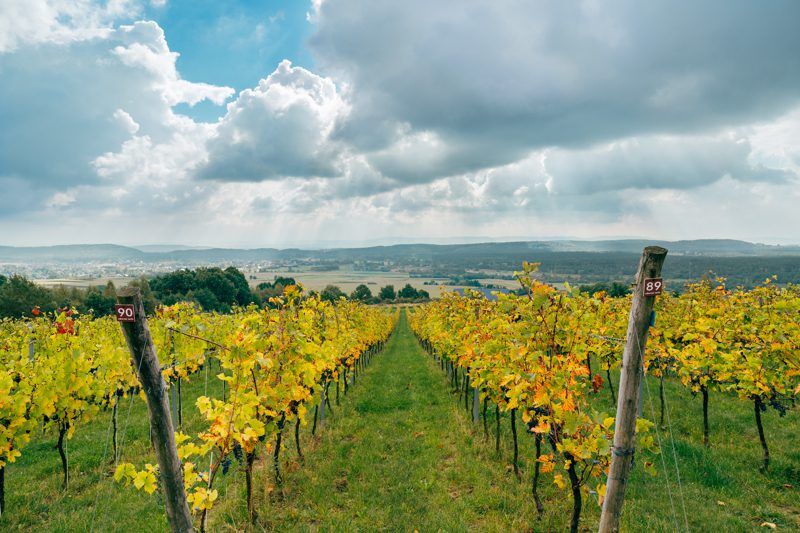
History has a way of repeating itself. After five years of viticulture and three years of winemaking, we’re back to square one. We’re planning to plant another hectare of vines, and the immediate question is: what to plant?
The dilemma of hybrids or vinifera returns like a boomerang. This is a topic I touched on at the beginning of our winemaking journey five years ago. here;#atfp_close_translate_span# the topic that took us from the land of pure vinifera to the land of hybrids… and back again. In the end, we planted 80% hybrids and 20% vinifera.
Now we’re back to square one, but with perspective. One would think that after five years of growing grapes, the choice would be simple. However, it’s not. Yes, I’m a bit wiser with experience, but as usual in any field of wine growing or production, there are so many moving and unknown aspects that nothing is ever simple.
Well, to sum up my experience as a farmer and winemaker in one, let’s delve into this topic a bit.
Vinifera is sexier in name but it doesn’t really matter in terms of perception
In addition to our sales to restaurants and distributors, we bottle a lot of wine during tastings at the winery. These are important meetings for us because we learn directly about our guests’ preferences—in short, which of our wines they enjoy the most. It’s true that when words like Chardonnay or Riesling are mentioned, the taster raises an eyebrow with interest because they recognize them. The name “hybrid” usually means nothing to them. Similarly, during a vineyard tour, everyone rushes to where the Pinot Noir or Riesling is grown. And that’s definitely a big plus for vinifera—they simply attract attention..
However, during the tasting, with each passing minute, I see how the vinifera varieties lose their importance, how wines from hybrids—varietals whose names no one can repeat, much less remember—become the favorites of the evening. It even got to the point that when we polled the audience after the tasting to see what they liked best, after a moment of consternation, the answers are: wine number 1, number 2, etc.
The idea that good wine can only be made from vinifera is becoming a thing of the past.
Recently, at a pleasant wine evening where I was presenting my wines, a friend, a wine connoisseur, kept repeating that only viniferas have a future in Poland, which didn’t stop him from pouring himself several servings of my hybrid wine. At one point, I couldn’t resist and asked, “You claim it’s only viniferas, but you’ve been drinking my hybrids for half the evening, and I see you really like them.” We laughed.
Hybrids are usually associated with grapes that are resistant to disease and frost, but are poor winemakers. This was the case for many years, and the perception remains. However, today we live in a different world. Over the last 10-20 years, a new wave of varieties has emerged—something I call super hybrids – From which high-quality wines can be made. These are no longer Concords or Marszałeks. These are Solaris, Johanniters, Hibernales, and Cabernets. These are the varieties from which wines from our Krakow winery land on the tables of Michelin-starred restaurants, and not just in Poland. These are wines that routinely win medals at the London International Wine Challenge, and not just in the separate hybrid wine category.
Not all vinifera are the same
It’s not like people want to drink Vinifera. Who among normal drinkers has heard of Brujidera or Parellada? There are nearly ten thousand Viniferas, and consumers only have 20-30 varieties in their heads; the rest are local and little-known. People simply want to drink what they know, and years of marketing have turned Chardonnay, Riesling, and Pinot Noir into household names. As the Americans say, it’s all a marketing ploy.
Of course, this is a crucial marketing move. Breaking through the industry with hybrids isn’t easy; it’s definitely easier with Chards or Pinots, and a winemaker must certainly factor this into their calculations.
A new wave of hybrids is the key to the renaissance of Polish winemaking.
If Polish winemaking is to thrive—which means establishing commercial, not hobby, vineyards—we need to have stable components to this investment. In my experience, these are hybrids, not viniferas.
As a winemaker/farmer, I grow four vinifera varieties and five hybrids, so I have experience on both sides of the fence. The fundamental problem with vinifera is that it ripens very late, is more susceptible to disease than hybrids, and even if it survives to harvest, the harvest is minimal. This poses a significant risk to the entire investment.
It’s important to realize that establishing a vineyard—say, 3 hectares—involves purchasing land, preparing it, purchasing seedlings and planting them, purchasing and installing scaffolding and fencing, purchasing and operating cultivation equipment, constructing or adapting a winery building, purchasing expensive winemaking equipment, and finally, two to three years of cultivation (and all the associated costs) before the first harvest. The cost of such an investment is approximately one million złoty. Regardless, this is already a significant sum, which, in a wine business plan, typically only pays off after fifteen years.
Now imagine that with the above inputs, we establish a vinifera plantation that yields only a patchy harvest, the amount of wine per hectare is well below average, and, to make matters worse, there’s no guarantee that any harvest will actually occur. Such a project is doomed to failure.
People believe that climate change is driving the current wine renaissance in Poland. Yes, climate change is certainly helping, but it’s only a small piece of the puzzle. We know full well that the global warming graph isn’t a straight line, but rather a sine wave of exchange rates. There will certainly be years like 2018, but there will also be years like 2017 and months like May 2019. This is inevitable, and it must be taken into account when deciding to establish a vineyard..
What, in my opinion, is driving the renaissance of Polish winemaking today, and what gives this renaissance a chance of lasting—unlike British winemaking in the 1990s—is this new wave of super hybrids. They are making our domestic projects viable and sustainable, even if long-term.
Quo Vadis Polish Wine?
At this point, we’re at the “Oh, Polish wine, interesting!” stage. Foreigners and Poles alike are discovering Polish wine—it’s becoming fashionable. This isn’t surprising, because wherever we go, say, to Italy, we don’t want to drink French wine or eat German food in a local restaurant. However, soon, when Polish wine becomes less of a novelty, a trend for local wines will begin (now, when we go to a restaurant in Tuscany, we don’t ask for Italian wine, we ask for local wine). And this progression will cause the specific wine variety (whether hybrid or vinifera) to lose even more importance. Such tourists simply want to drink good, local wine, period.
When it comes to “marketing play”, one word comes to mind: Solaris. It’s the only hybrid variety that’s already recognizable enough to be slowly becoming our national variety. I usually call Solaris the workhorse of Polish vineyards: a variety that ripens early and from which you can make very good wine in a variety of ways—dry, sweet, or late harvest.
And here we come to the heart of the matter. Should I plant vinifera or hybrids? The answer is both, with the latter predominating, and sometimes only the latter. I’ll try to explain.
In the United States, there’s always a so-called “halo car” on display in front of a major car dealership—a dream car, often a sporty model with vibrant colors, designed to attract customers. Such a car is just a dream, because when you consider real needs, the customer usually leaves the dealership not with a colorful “halo” car, but with a silver sedan with a large trunk and room for a child seat. But the “halo car” did its job..
I see Viniferas similarly here – these “halo wines.” Where wine projects primarily involve direct sales, Viniferas lose value and may be marginal. However, where sales are primarily based on distribution, Viniferas have their place because in a restaurant or wine shop, the consumer, sitting alone with a card or standing in front of a store shelf, is more likely to choose Vinifera (the aforementioned marketing play).
So, anyone who starts to establish a vineyard and choose varieties must actually start from the end and ask themselves what the sales will look like?
ps: of course, this entire discussion only partially illustrates our topic. I haven’t touched on issues like proper habitat or the winemaker’s “know-how,” but those are topics for another day.