A family-owned organic vineyard – what makes it stand out?
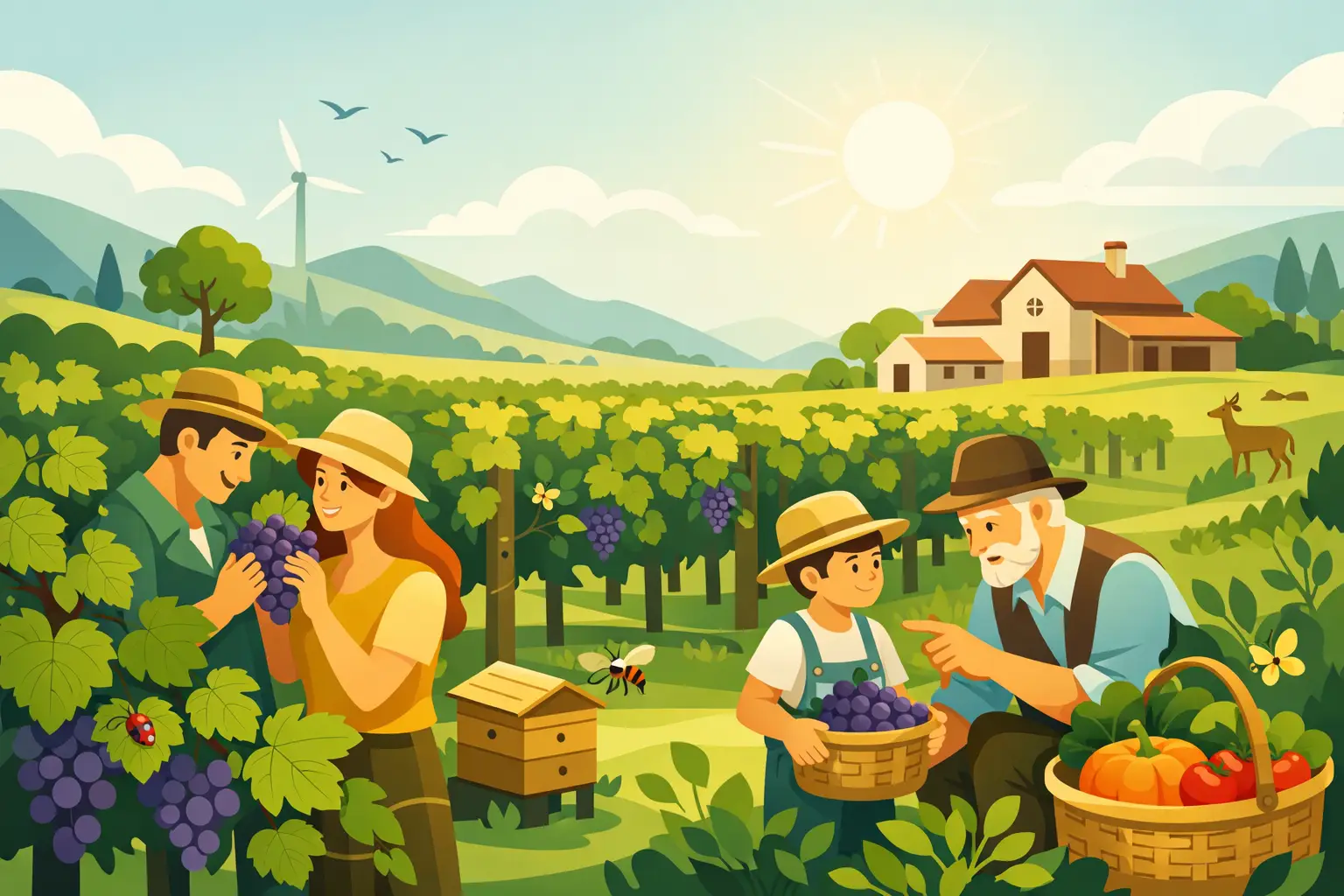
There are places where you simply buy wine. There are also places where you come for something more – peace, scenery, conversation with a winemaker, and a taste that has a specific address. That’s why a family-owned organic winery is generating so much interest among those who want to make conscious choices and relax close to nature.
There’s no trendy slogan behind this concept. If a winery truly operates organically, it means making daily decisions in the vineyard and processing plant: no chemical pesticides, no artificial fertilizers, with great respect for the rhythm of nature, and careful control of every step. On a family scale, this cannot be hidden behind marketing. Here, everything is visible—in the condition of the vines, the quality of the fruit, and how the wine is made.
What a Family Organic Vineyard Really Is
Simply put, it’s a vineyard run by a family that cultivates grapes and creates wine according to ecological principles. In practice, however, it’s much more than a formal definition. Family character means continuity, personal responsibility, and craftsmanship. Ecological character, in turn, implies specific production standards and a willingness to work, which may be more difficult but is more honest towards the land and the consumer.
This model isn’t about rushing nature at all costs. It’s about accurately reading the conditions of a given site—the soil, sunlight, airflow, and seasonal conditions—and then working so that the vines can produce healthy fruit without excessive interference. This requires knowledge, patience, and regular presence in the vineyard. There are no shortcuts here.
For the guest or end customer, this difference is palpable. A family-owned organic winery doesn’t offer an anonymous product. It offers wine with the history of the place and the people who take responsibility for it, from the first winter cut to the moment it’s poured into the glass.
Ecology in the vineyard – what does it mean in practice?
The word “ecological” is sometimes used too loosely, so it’s worth clarifying. certified#atfp_close_translate_span# cultivation No chemical pesticides or artificial fertilizers are used. This is important not only for the vines themselves, but also for the soil, biodiversity, and long-term health of the site.
It sounds ideal, but it’s worth being honest: organic farming isn’t easier. Quite the opposite. It requires greater discipline, meticulous monitoring of the plot, and a quick response to weather conditions. In favorable years, nature rewards this effort with beautiful fruit. In more challenging seasons, disease pressure or unpredictable weather can set the bar high.
That’s why in ecology, experience, not declarations, counts. A good vineyard doesn’t promise that nature will always be predictable. Rather, it demonstrates its ability to cooperate with it. This is precisely the essence of working in harmony with nature—not in the absence of control, but in wise, minimal intervention where it’s truly needed.
A certificate is not a decoration
For many, organic certification is an important benchmark, confirming that an ecological approach is based on real standards and control. This is especially important when customers want to buy consciously, rather than relying solely on hearsay.
In the wine industry, trust is paramount. When a winery communicates its commitment to eco-friendliness, certification solidifies that relationship. It demonstrates that quality and integrity don’t end with the label.
Why the family model makes a difference
On a large scale, it’s easier to achieve consistency. On a family scale, it’s easier to develop character. This doesn’t mean that one is inherently better than the other. It just means that family winemaking allows for greater attentiveness and a more personal approach.
When specific people are behind the vineyard, it’s easier to maintain consistency between cultivation, production, and the way guests are treated. A guide often knows every row of vines not from a map, but from their daily work. The winemaker doesn’t share the process from a manual, but from their own experience. This immediately transforms the experience of the tasting.
Family-friendly isn’t just about an intimate atmosphere. It’s also about building quality. Decisions are made closer to the land, closer to the harvest, and closer to the guest. And this usually translates into a more authentic experience.
The taste of the place, not just the style of the wine
A good wine always tells a story about more than just the grape variety. It tells a story about the place. It tells a story about what the summer was like, how the soil worked, how much sun the grapes received, and what decision the winemaker made at the right time. This is why wines from small, organic vineyards often attract so much attention from those who want to understand what they’re drinking.
In Poland, this story is particularly compelling. Our winemaking is maturing, yet still retains its freshness and local character. It doesn’t try to copy everything from abroad. It’s increasingly demonstrating its own identity—based on climate, landscape, and bold yet thoughtful craftsmanship.
When minimal intervention in the fermentation process is added, the wine retains its integrity. Of course, this also requires balance. Too little control can harm quality, too much can rob the wine of character. Experience and a sense of when to give nature space and when to take a firm stance bring the process to life.
A family-owned organic vineyard is a must-visit place
For many guests, the first impulse is to buy the wine. Then, it turns out that the place itself is just as valuable. This is natural, because a winery is not just a store. It is a landscape, a seasonal rhythm, and an atmosphere that is difficult to replicate anywhere else.
Tour#atfp_close_translate_span# with tasting It allows you to see how theory translates into practice. Guests not only hear about ecology, but also see the vineyard, learn about the process, and sample the wines where they are produced. This form of contact with wine offers much more than a quick off-the-shelf purchase. It helps them understand the differences between white, red, and sparkling wines, but also understand the reasons behind these differences.
In regions like the Kraków-Częstochowa Upland, there’s another important element – the surroundings themselves. A view of the vineyards, a peaceful terrace, a shared table, a glass of wine, and local ingredients can create an experience that makes you want to return. You don’t need to be an expert. Just curiosity and a desire to have a good time are enough.
For whom is this vineyard the best choice?
Most often, they’re for people seeking quality combined with authenticity. For couples planning a quiet weekend, for groups of friends who prefer a guided tasting to a noisy night on the town, and for those who like to know where their food comes from.
This is also a good direction for people organizing important moments. Intimate#atfp_close_translate_span# wedding, an elegant corporate event, a seasonal outdoor gathering – the vineyard provides a ready-made setting, but without artificiality. It is aesthetically pleasing, natural, and with the feeling that the place truly “carries” the event.
Here, too, it’s worth being realistic. Not every winery will suit every guest. Some seek a very relaxed atmosphere, others prefer a more structured tasting experience. Some want a long conversation about fermentation, others simply want to enjoy a good wine with a view. A well-run, family-run organic winery can meet both needs, as long as it doesn’t pretend to be a place for everyone at once.
Why this approach matters today
More and more people want to buy less, but better. This also applies to wine. It’s not just the taste that matters, but also the production method, the transparency of the process, and the credibility of the brand. In this sense, organic, family-run winemaking responds well to modern expectations—not through fashion, but through substance.
The Jura Vineyard demonstrates that certified ecology, family craftsmanship, and a refined guest experience can be combined into one cohesive whole. This is important, because good wine doesn’t end with the bottle. It lingers in the memory as a taste of place, conversation, and time spent unhurriedly.
So if the phrase “family-owned organic vineyard” sounds like a promise, it’s worth checking what it really means. Often, it’s not just about the wine. It’s about choosing a place that operates honestly, welcomes guests with heart, and allows you to spend a moment closer to nature.